
What the Clorox-GOJO Acquisition Means for Northeast Ohio’s Economy
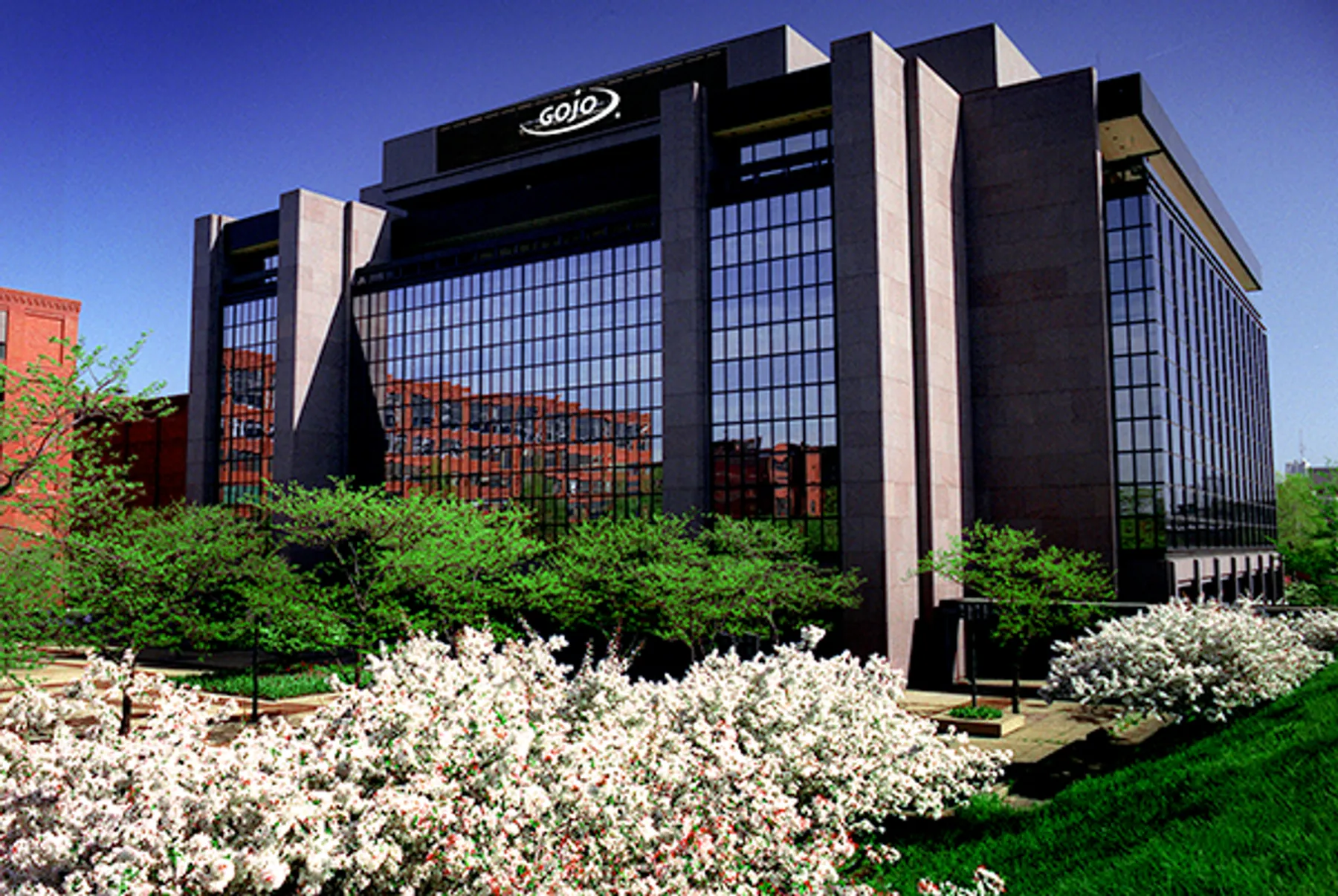
The recent announcement that The Clorox Company will acquire GOJO Industries, the Akron-based maker of Purell®, has sparked understandable concern among local investors, employees, and civic leaders.
Large acquisitions often raise immediate questions: Will jobs be cut? Will headquarters move? Will local innovation suffer?
In this case, the available data, deal structure, and historical precedent suggest a different, and notably more positive, outlook for Northeast Ohio.
A Strategic Acquisition, Not a Cost-Cutting One
At $2.25 billion, Clorox’s acquisition of GOJO is not a distressed sale or a turnaround play. It is a growth-driven transaction that brings together two profitable, category-leading organizations with complementary strengths.
GOJO enters the deal with:
- Nearly $800 million in annual revenue
- A three-year compound annual growth rate of approximately 5%
- More than 80% of revenue derived from recurring, B2B-driven demand
- A dominant installed base of roughly 20 million dispensers globally
These are not the characteristics of a company being absorbed for efficiency-driven layoffs. Instead, they signal a business being acquired to scale.
Why Layoffs Are Not the Central Value Driver
Clorox has publicly stated that the acquisition is expected to generate approximately $50 million in run-rate cost synergies. In the context of a nearly $2 billion net purchase price and an 11.9x EBITDA multiple, those synergies are modest.
Historically, synergies of this scale are achieved through:
- Supply chain optimization
- Procurement efficiencies
- Shared back-office systems
- Expanded distribution leverage
They are not typically achieved through wholesale workforce reductions, particularly when the acquired company’s manufacturing, R&D, and regulatory capabilities are core to the growth thesis.
GOJO’s Ohio Footprint Remains Strategically Important
One of the most overlooked, and important, elements of the announcement is Clorox’s explicit commitment to keeping GOJO based in Ohio.
GOJO’s value is deeply tied to:
- Its Northeast Ohio manufacturing infrastructure
- Its research and development operations
- Its regulatory and compliance expertise
- Its long-standing institutional relationships in healthcare, education, and commercial facilities
Relocating or hollowing out these functions would undermine the very advantages Clorox is paying to acquire.
Manufacturing and R&D Are Not Easily Replicated
GOJO’s Akron-area operations are not interchangeable assets. Skin health and hygiene products require:
- Specialized formulation expertise
- Strict regulatory oversight
- Proximity between R&D and manufacturing teams
For Clorox, preserving and investing in this ecosystem is far more economically rational than dismantling it.
Northeast Ohio’s Track Record with Strategic Acquisitions
Concerns about acquisitions often stem from past examples where local companies were absorbed and downsized. However, data shows that outcomes vary significantly depending on the buyer’s intent.
According to the Brookings Institution, acquisitions driven by product expansion and category leadership are statistically more likely to:
- Preserve core employment
- Increase capital investment over time
- Expand global reach for regional brands
This deal aligns more closely with those growth-oriented transactions than with private equity roll-ups or consolidation-driven cost plays.
Purell’s Growth Potential Benefits the Region
Purell is already the market leader in hand sanitizer across both retail and professional channels. Clorox’s global distribution, brand-building expertise, and retailer relationships materially expand that opportunity.
As retail and international demand grows, so does the need for:
- Product innovation
- Manufacturing capacity
- Regulatory coordination
- Brand stewardship
Those functions do not disappear; they scale.
For Northeast Ohio, that means the region remains embedded in a globally relevant health and hygiene platform rather than a standalone mid-sized manufacturer competing alone.
What This Means for the Local Economy
From an economic impact standpoint, the acquisition offers several stabilizing forces:
- Continued employment base tied to manufacturing, R&D, and corporate operations
- Increased capital investment as Clorox integrates and expands the platform
- Long-term brand security under a publicly traded company with strong cash flow
- Expanded global reach for a Northeast Ohio–born innovation
While no transaction is entirely risk-free, this deal structurally favors continuity and growth over contraction.
Frequently Asked Questions
Will GOJO jobs be cut?
There is no indication of broad workforce reductions. The acquisition’s economics are driven by growth, not aggressive cost elimination.
Is GOJO leaving Ohio?
No. Clorox has stated that GOJO will continue to be based in Ohio.
Why did Clorox acquire GOJO?
To expand its health and hygiene portfolio with a trusted, high-growth brand and strengthen both consumer and professional channels.
Is this bad for the local economy?
Available data suggests the opposite: the transaction reinforces Northeast Ohio’s role in a global health and wellness platform.
A Long-Term View
For nearly 80 years, GOJO has grown by solving real-world hygiene challenges through innovation. This acquisition does not erase that legacy, it extends it.
Rather than viewing the transaction as a loss of independence, it may be more accurate to see it as the next chapter in scaling a Northeast Ohio success story onto a global stage, with the region still firmly at its center.
Sources
- The Clorox Company, “Clorox Announces Acquisition of GOJO Industries,” Jan. 22, 2026
- GOJO Industries Company Background and Financial Disclosures
- Brookings Institution, How M&A Impacts Regional Employment and Innovation
- Harvard Business Review, When Acquisitions Create Jobs Instead of Cutting Them
- U.S. Bureau of Labor Statistics, Manufacturing and R&D Employment Trends
Author

Bhavin Patel has over fifteen years of comprehensive business management experience and an exceptional record of accomplishments in operations, with expertise in real estate M&A. He has a proven ability to implement corporate goals and business objectives.
.png)
.webp)

.png)
Invest with GHC for a better future.
At GHC, our investment strategy focuses on achieving the full potential of promising assets. We offer robust opportunities for our investors by nurturing businesses to reach their peak performance, emphasizing long-term growth over short-term gains. This approach secures stable growth and strong returns, creating lasting value for our investors and the communities we serve.
