
Why Housing Needs to Be Built Like a Platform, Not a Project
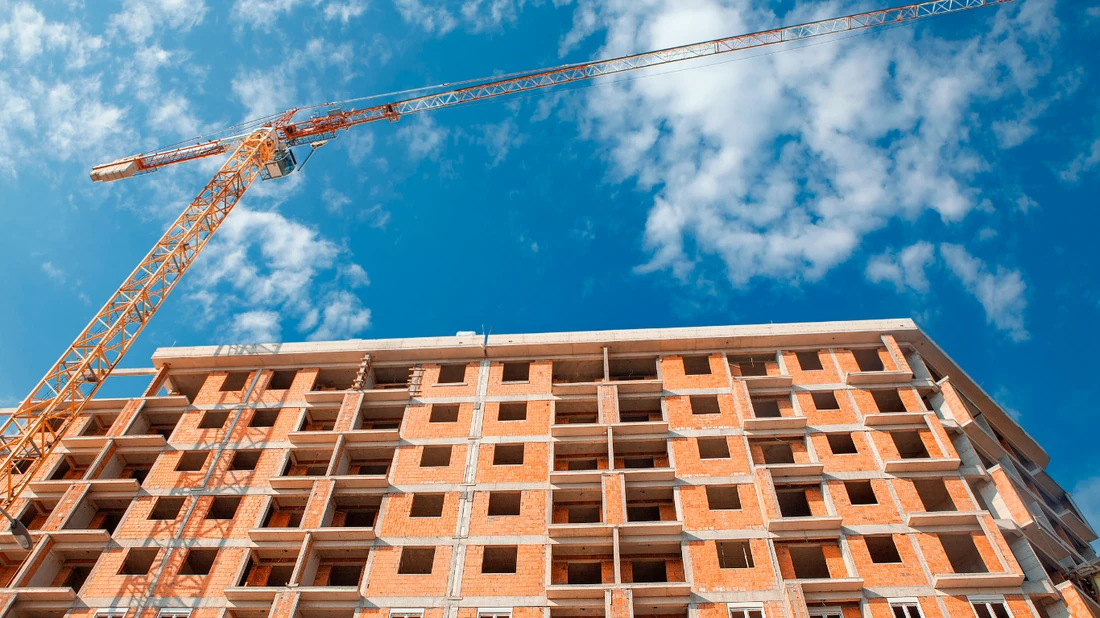
The residential construction industry has a productivity problem. While nearly every other sector has figured out how to improve output through standardization, automation, and scale, housing development still treats each building as a custom exercise. New site, new design, new subcontractors, new problems.
The result is predictable: cost overruns, delays, and a supply deficit that compounds every year.
There's a better model. It's already working in Sweden, Germany, and North America. It's worth paying attention to.
What "platform" actually means in housing
A platform in multi-family housing isn't just "modular buildings." It's a system: standardized unit types and floor plates that repeat across projects, a factory-based supply chain that manufactures components in controlled conditions, a digital backbone (BIM, digital twins, configuration tools) that carries information across the full building lifecycle, and a repeatable development playbook covering site selection, entitlements, financing, and operations.
The goal is to turn housing development from a series of one-off projects into something closer to a product business, where each iteration gets cheaper, faster, and smarter.
The evidence is already there
In Germany, INDUSTRIA's analysis of serial and modular residential development found 10 to 30% construction cost savings versus conventional methods. In their 2025 investor survey, 56% of institutional investors expected higher returns from serial and modular projects than from traditional construction. That's not a fringe view anymore.
In Toronto, the University of Scarborough student housing project prefabricated 1,200 dorm units off-site and completed on-site assembly in roughly 60 days, about 60% faster than local conventional methods. IRR improved from 12% to 16.5% after adopting modular methods.
Brookfield's acquisition of Yes! Communities, which owns 300+ prefabricated housing parks and 56,000+ units, tells the same story from the institutional side. After integrating standardized modular supply chains, annual rental yields reached 9.2% and asset valuations rose roughly 40% over a few years.
Academic research on industrialized housing firms in Sweden shows the same pattern: standardized, digital, reusable information across the building lifecycle creates real competitive advantage through tighter supply chain control, better quality outcomes, and operating upside from managing assets over time rather than handing them off.
Why speed is the real story
Platform-based construction cuts build times by 20 to 60% in documented cases. That's not just a construction metric. It means rental income arrives months earlier, financing drag shrinks, and capital recycles faster across a portfolio.
For investors running a 10-year fund, the difference between a 36-month and an 18-month development timeline is structural. You can run more deals. You get better data faster. Your downside risk on any single project narrows because you're not holding through multiple rate cycles and policy shifts while a building slowly rises.
Learning effects and the software angle
Here's what separates a real platform from a marketing claim: the value compounds.
Reusable designs get cheaper and better with volume. Digital tools capture what works and feed it back into the next project. Standardized entitlement and financing processes reduce friction across markets. The platform IP, data, and operating system become assets in their own right, not just a means to deliver buildings.
This is a familiar dynamic for technology investors. It's less familiar in real estate. The business that learns fastest, compounds.
Policy is pushing in the same direction
The U.S. Housing Supply Chain Act designates modular construction as a priority, with tax credits up to $2M per project. Canada committed C$1.5B to a Modular Housing Fund. California has set a 30% modular penetration target by 2030. New York City offers FAR bonuses for modular development.
These aren't minor regulatory footnotes. They represent governments trying to move housing supply faster than traditional development allows, and reaching for the same solution that institutional investors are already backing.
What this means for capital allocation
The risk profile of platform-based multi-family is more predictable than traditional development. Budgets and schedules are tighter. Quality is more consistent because it's factory-controlled rather than weather-dependent and contractor-dependent. The assets are designed for repeatability, which makes them easier to underwrite, operate, and sell.
The opportunity isn't just in individual deals. It's in building exposure to the platform itself: the standardized designs, the supply chain relationships, the digital tools, and the data that accumulates across a portfolio of projects.
That's where housing starts to look less like real estate and more like infrastructure.
Why Housing Needs to Be Built Like a Platform, Not a Project
There's a question I keep coming back to: why hasn't housing construction kept pace with almost every other industry? Manufacturing, logistics, even agriculture have all found ways to scale through standardization and automation. Housing largely hasn't. Every project still starts from scratch: new site, new design, new subcontractors, new problems.
The result is what we all see: cost overruns, delays, and a supply deficit that gets worse every year. But behind those numbers are people, young families priced out of the neighborhoods they grew up in, workers who can't live near the jobs we're bringing to our own state, seniors who need somewhere affordable to land. Every year we don't fix this, that gap gets a little harder to close.
There's a better way to build, and it's already working in Sweden, Germany, and parts of North America. I think it's worth all of us paying attention to.
What "platform" actually means in housing
A platform in multi-family housing isn't just "modular buildings." It's a full system: standardized unit types and floor plates that repeat across projects, a factory-based supply chain that manufactures components in controlled conditions, a digital backbone (BIM, digital twins, configuration tools) that carries information across the full building lifecycle, and a repeatable playbook for site selection, entitlements, financing, and operations.
The idea is simple: turn housing development from a series of one-off projects into something closer to a product business, where each iteration gets cheaper, faster, and smarter than the last.
The evidence is already there
In Germany, INDUSTRIA's analysis of serial and modular residential development found construction cost savings of 10 to 30% versus conventional methods. In their 2025 investor survey, 56% of institutional investors expected higher returns from serial and modular projects than from traditional construction. That's no longer a fringe view.
In Toronto, the University of Scarborough student housing project prefabricated 1,200 dorm units off-site and finished on-site assembly in roughly 60 days, about 60% faster than conventional local methods. IRR improved from 12% to 16.5% after the shift to modular.
Brookfield's acquisition of Yes! Communities, which owns 300+ prefabricated housing parks and 56,000+ units, tells the same story from the institutional side. After integrating standardized modular supply chains, annual rental yields reached 9.2%, and asset valuations rose roughly 40% over just a few years.
Academic research on industrialized housing firms in Sweden shows the same pattern: standardized, digital, reusable information across the building lifecycle creates real competitive advantage, through tighter supply chain control, more consistent quality, and operating upside from managing assets over time instead of just handing them off.
Why speed is the real story
Platform-based construction cuts build times by 20 to 60% in documented cases. That's not just a construction metric, it changes the economics. Rental income arrives months earlier, financing drag shrinks, and capital recycles faster across a portfolio.
For a fund running on a 10-year horizon, the difference between a 36-month and an 18-month development timeline is structural. You can run more deals. You get better data faster. Your downside risk on any single project narrows, because you're not holding through multiple rate cycles and policy shifts while a building slowly rises.
But zoom out from the spreadsheet for a second: 18 months instead of 36 also means a family gets keys to a home a year and a half sooner. That's not a footnote. That's the whole point.
Learning effects and the software angle
Here's what separates a real platform from a marketing claim: the value compounds.
Reusable designs get cheaper and better with volume. Digital tools capture what works and feed it back into the next project. Standardized entitlement and financing processes reduce friction across markets. The platform itself, its IP, data, and operating system, becomes an asset in its own right, not just a means to deliver buildings.
That's a familiar dynamic for technology investors. It's less familiar in real estate. But the principle holds: the business that learns fastest, compounds fastest.
Policy is pushing in the same direction
The U.S. Housing Supply Chain Act designates modular construction as a priority, with tax credits up to $2M per project. Canada has committed C$1.5B to a Modular Housing Fund. California has set a 30% modular penetration target by 2030. New York City offers FAR bonuses for modular development.
These aren't minor regulatory footnotes. Governments are reaching for the same solution institutional investors are already backing, because they need housing supply to move faster than traditional development allows.
What this means for Ohio
I keep coming back to what this could mean closer to home. Ohio has real momentum right now, in manufacturing, in population growth in our metro areas, and in the broader Midwest resurgence. A platform approach to housing is a direct answer to two things our communities need most: more housing supply, and more of it built here, by Ohio-based manufacturing and labor, by our own neighbors.
This state has built things the world needed before, and I believe we can do it again with housing. If we get the playbook right, standardized designs, factory-based supply chains, and financing models built for repeatability, Ohio isn't just a place that benefits from this shift. It can be a place that leads it, and a place where more of our people can actually afford to stay and put down roots.
What this means for capital allocation
The risk profile of platform-based multi-family is more predictable than traditional development. Budgets and schedules are tighter. Quality is more consistent, because it's factory-controlled rather than weather-dependent and contractor-dependent. The assets are designed for repeatability, which makes them easier to underwrite, operate, and sell.
The opportunity isn't just in individual deals. It's in building exposure to the platform itself: the standardized designs, the supply chain relationships, the digital tools, and the data that accumulates across a portfolio of projects.
That's where housing starts to look less like real estate, and more like infrastructure. And infrastructure is what builds communities and economies that last, and gives people a real place to call home.
Author

Bhavin Patel has over fifteen years of comprehensive business management experience and an exceptional record of accomplishments in operations, with expertise in real estate M&A. He has a proven ability to implement corporate goals and business objectives.



Invest with GHC for a better future.
At GHC, our investment strategy focuses on achieving the full potential of promising assets. We offer robust opportunities for our investors by nurturing businesses to reach their peak performance, emphasizing long-term growth over short-term gains. This approach secures stable growth and strong returns, creating lasting value for our investors and the communities we serve.
