
How Hospitality Integrated Residential Could Expand Workforce Housing in Ohio
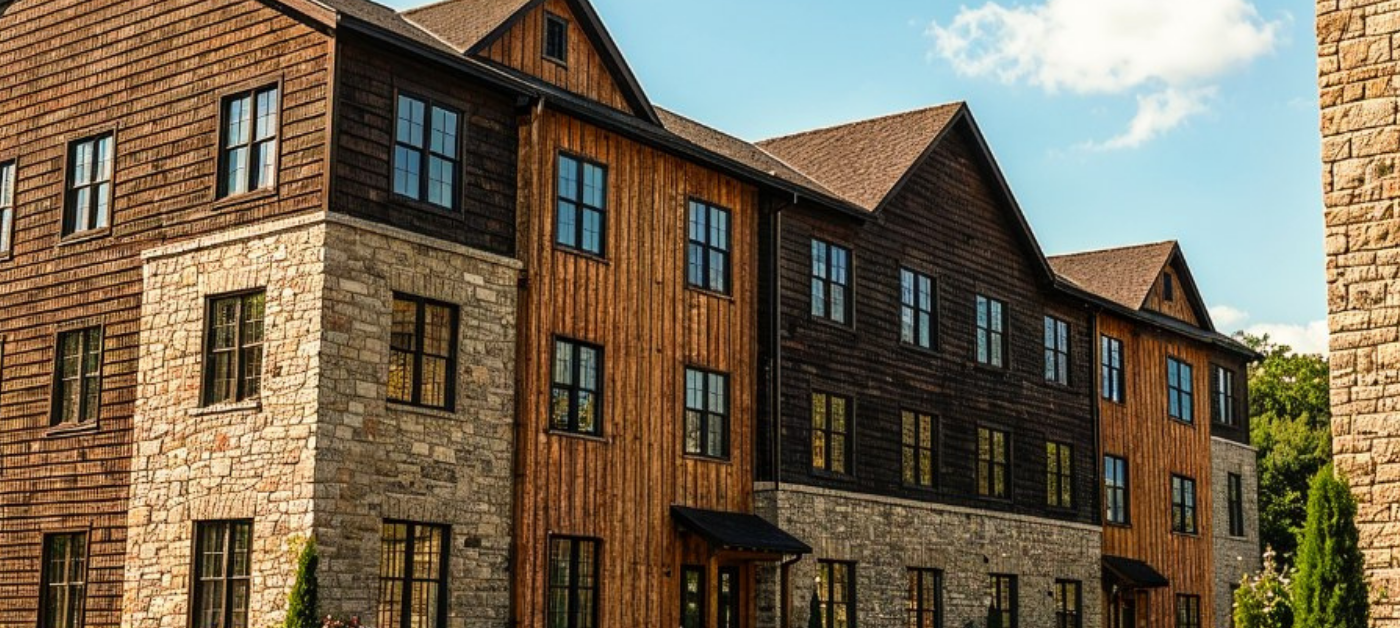
For decades, the real estate industry has treated hospitality and multifamily housing as separate categories.
Hotels serve people for nights or weeks. Apartments serve people for years. Each has its own staffing model, operating structure, amenities, revenue strategy, and development economics.
That distinction made sense when the line between traveling and living was clearer.
Today, that line is increasingly blurred.
Traveling nurses may spend months in one community before moving to the next assignment. Contractors follow major infrastructure and manufacturing projects. Employees relocate for training or temporary assignments. Young professionals want flexibility. Empty nesters may want fewer responsibilities without giving up service or quality. At the same time, communities need permanent housing for teachers, health care workers, first responders, tradespeople, and other middle-income residents.
The housing market has not fully caught up with those changes.
Hospitality Integrated Residential, or HIR, is designed around them.
HIR brings extended-stay hospitality and multifamily residential together within a coordinated operating platform. Instead of simply putting a hotel and apartments on the same site, the model integrates staffing, infrastructure, services, resident experience, and operations.
The result could create a new category of real estate, one designed to expand housing options while improving the economics of developing and operating them.
And the first proving ground is Ohio.
What Is Hospitality Integrated Residential?
Hospitality Integrated Residential (HIR) is a real estate model that combines extended-stay hospitality and long-term residential housing through a shared operating platform.
The distinction between HIR and traditional mixed-use development is important.
Mixed-use development typically places multiple uses together. An apartment building may sit beside a hotel, restaurant, or retail space, while each operates largely as an independent business.
HIR is based on operational integration.
Hospitality provides the service and operating layer. Residential provides the long-term living foundation. Shared infrastructure connects the two.
Staffing, management, security, housekeeping, resident services, technology, and other operational functions can be coordinated across the property rather than duplicated between two separate assets.
Project Homefield, the Ohio-based platform described in the HIR model, pairs StudioRes by Marriott extended-stay hospitality with workforce-oriented multifamily housing. The concept is designed to serve residents ranging from people staying for days or months to households signing traditional yearlong apartment leases.
That creates a continuum of housing that looks different from the traditional hotel-or-apartment choice.
Why Create a New Real Estate Category?
Real estate categories are useful until the market starts behaving differently than the categories assume.
Housing is experiencing that shift now.
The people who need housing are more mobile. Employers are expanding into new markets faster than housing can always be delivered. Major construction, manufacturing, health care, technology, and infrastructure projects can create both temporary and permanent workforce demand.
Meanwhile, developing housing has become increasingly difficult.
Land, construction, labor, financing, insurance, taxes, and operating expenses all influence what rent a new property needs to charge. In many suburban and ex-urban communities, the economics can be especially challenging because a smaller apartment community still requires professional staffing and management.
HIR approaches the problem from the operating model backward.
Instead of asking how to make a conventional apartment development slightly less expensive, it asks a different question:
What if hospitality infrastructure could make residential housing more efficient to operate?
A co-located extended-stay property already requires people, systems, technology, security, and operating infrastructure. If portions of that platform can serve the residential component as well, the economics begin to change.
The HIR thesis is that shared operations can reduce duplication while maintaining a professionally managed resident experience.
That distinction matters because the housing affordability challenge cannot be solved entirely through cheaper construction. Operating efficiency has a role to play, too.
The Missing Middle of the Housing Market
One of the clearest opportunities for HIR is workforce housing.
Across many communities, the housing market has developed a gap between income-restricted housing and newly built market-rate or luxury apartments.
The people caught in that gap are often the people communities depend on every day.
Teachers. Nurses and health care workers. Contractors and tradespeople. First responders. Young professionals. Young families.
They may earn too much to qualify for subsidized housing while still struggling to comfortably afford much of the new housing being delivered.
Project Homefield identifies a substantial housing shortage in Ohio and is specifically designed around this missing-middle segment. Its residential component targets attainable workforce rents, while the extended-stay component is designed for traveling professionals, contractors, people relocating for work, and others needing housing for periods between a traditional hotel stay and a conventional lease.
These groups may look different on paper, but they are often connected by the same economic forces.
A new manufacturing facility may require hundreds of construction workers during development, specialized employees during commissioning, corporate teams during training, and permanent workers once the facility is operational.
One economic development project can therefore generate multiple forms of housing demand over several years.
HIR is designed to accommodate more of that continuum.
How HIR Could Help Make Workforce Housing More Viable
The central innovation behind HIR is operational efficiency.
Consider a standalone apartment community in a deeper suburban or ex-urban market. Residents still expect professional management, maintenance, security, technology, and responsive service. Providing those functions comes with fixed costs, regardless of whether the community has 150 units or 500.
Now place an extended-stay hospitality property on the same site.
The hotel already has an operating team and service infrastructure. Under the HIR model, certain staffing and operational functions can support both sides of the property.
Project Homefield is being designed around precisely this structure. Its proposed communities pair extended-stay accommodations with workforce apartments and use shared staffing and operations to support both.
That creates the possibility of delivering hospitality-level services to apartment residents while spreading operating costs across a larger combined platform.
For residents, that could mean professional management, security, housekeeping options, and convenience-oriented services.
For the property, it creates two complementary forms of demand: shorter-duration extended stays and longer-duration residential leases.
For communities, the larger implication is more important.
If integrated operations make smaller workforce communities economically viable in markets where conventional development struggles, HIR could expand the map of where new housing can be built.
Why Start With Ohio?
Ohio is an especially compelling place to test the model because its economic growth story and housing challenge are increasingly connected.
The state is attracting investment tied to advanced manufacturing, semiconductor production, data centers, energy infrastructure, defense, logistics, and reshoring.
Those investments require people.
And people require places to live.
Project Homefield is based on the premise that housing needs to become part of the economic development conversation much earlier. A community can attract employers and infrastructure investment, but sustained growth becomes more difficult when the workforce cannot find appropriate housing nearby.
The issue is particularly important outside the largest urban cores.
Project Homefield is targeting deeper suburban and ex-urban Ohio markets where workforce demand may be strong, but conventional multifamily development can be more difficult to operate economically. Its site-selection strategy considers employment and health care anchors, highway access, existing extended-stay demand, attainable local rents, land availability, and community alignment.
The initial pipeline is focused on Ohio, including Northeast Ohio, the Columbus region, and the Dayton region, with additional markets across the state under evaluation. The longer-term vision outlined in the project materials is a repeatable model that could eventually extend into other Midwestern markets.
That makes Ohio more than a location for the first projects.
It makes the state a laboratory for a different approach to workforce housing.
From Individual Development to Repeatable Platform
For HIR to become a meaningful real estate category, it has to work beyond one property.
That is why standardization is another important piece of the model.
Project Homefield envisions a repeatable development framework that combines a StudioRes by Marriott property with an adjacent workforce multifamily community. Rather than redesigning the operating concept for every location, the goal is to establish a consistent development and operating structure that can be adapted across qualifying markets.
Repetition matters.
Standardized designs can create greater predictability around construction. Repeated procurement can improve purchasing efficiency. Shared vendor relationships can reduce operational variation. Teams can learn from each development and apply those lessons to the next.
That is how an individual project can become a platform.
It is also how a new category can begin to emerge.
Housing Infrastructure for the Next Economic Cycle
The next phase of America's industrial growth will require more than factories, data centers, laboratories, warehouses, hospitals, and power infrastructure.
It will require housing.
Communities competing for major employers will increasingly have to consider whether workers can actually live near the jobs being created. That includes permanent employees, temporary workers, traveling professionals, contractors, and people moving into a region for the first time.
Traditional housing categories will continue to serve much of that demand.
But there is growing room between them.
Hospitality Integrated Residential is an attempt to fill that space by bringing together the flexibility and service infrastructure of hospitality with the permanence and community of residential housing.
Ohio is where that idea is being put into practice first.
If the model works as intended, the larger opportunity is not simply a collection of hotels and apartments. It is a repeatable approach to building housing in communities where economic growth is creating demand faster than traditional development models can respond.
That is the promise of HIR: a new real estate category built around the realities of how America's workforce lives, moves, and grows.
Sources
- Project Homefield: Hospitality Integrated Residential (HIR), Spark GHC and The Max Collaborative, 2026.
- Ohio Chamber of Commerce Research Foundation / SRC EvalMetrics, 2025, as cited in Project Homefield.
- Marriott International, StudioRes brand and extended-stay hospitality information, as referenced in Project Homefield.
- CBRE Dimension, Ohio extended-stay market and site-selection data, as referenced in Project Homefield.
- Ohio Apartment Association, Ohio housing market data, as referenced in Project Homefield.
- STR / CoStar, hospitality market data, as referenced in Project Homefield.
Author

Bhavin Patel has over fifteen years of comprehensive business management experience and an exceptional record of accomplishments in operations, with expertise in real estate M&A. He has a proven ability to implement corporate goals and business objectives.


Invest with GHC for a better future.
At GHC, our investment strategy focuses on achieving the full potential of promising assets. We offer robust opportunities for our investors by nurturing businesses to reach their peak performance, emphasizing long-term growth over short-term gains. This approach secures stable growth and strong returns, creating lasting value for our investors and the communities we serve.
