
What Hotels Can Teach Us About Building Apartments


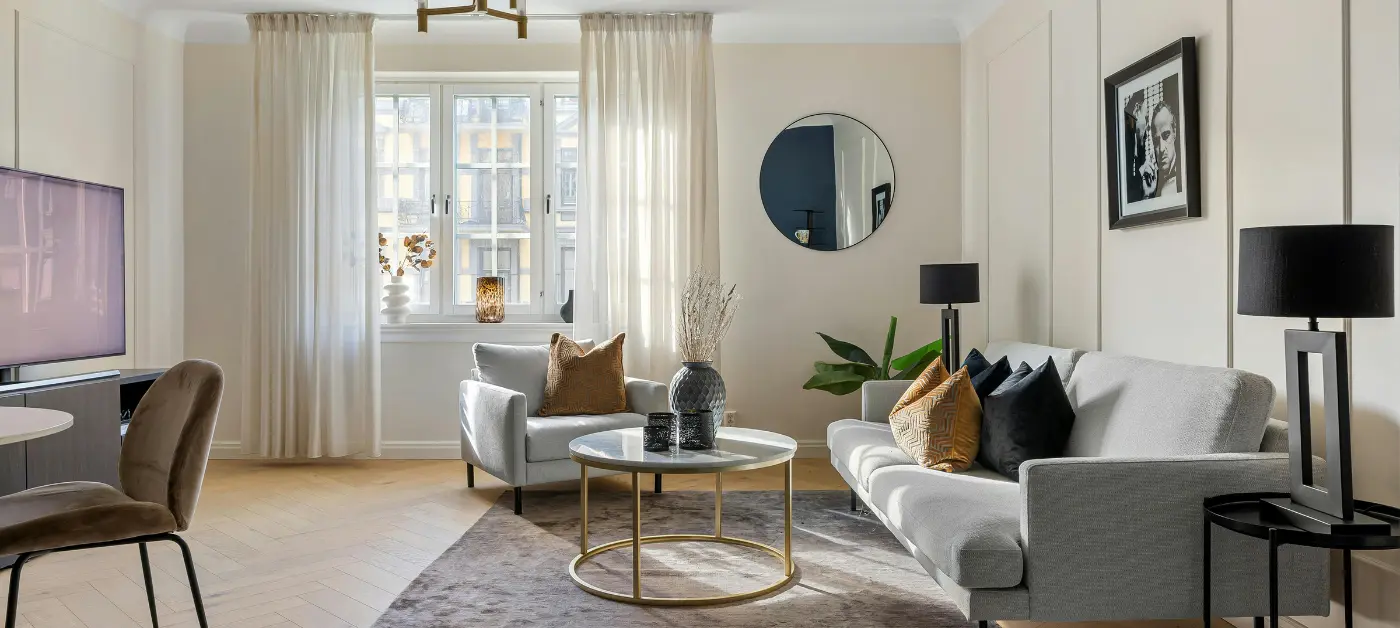
For decades, the hotel industry has been refining a deceptively difficult question: How do you create a space that feels good to occupy while making it efficient to build, furnish, staff, maintain, and replicate?
Multifamily developers are asking many of the same questions today.
Construction costs remain high. Labor is difficult to source. Financing costs have changed development economics. At the same time, renters still expect thoughtful design, useful amenities, and a high-quality living experience.
That puts pressure on developers to find efficiencies without simply stripping things out of the product.
Hotels offer an interesting playbook.
The most sophisticated hotel brands have spent decades developing prototypes, standardizing rooms, consolidating procurement, testing furniture packages, refining back-of-house spaces, and designing buildings around how they will actually operate.
There is a lesson there for apartment development.
The future of attainable multifamily housing may depend less on finding one breakthrough that dramatically reduces costs and more on systematically removing inefficiency from hundreds of decisions made before construction ever begins.
Start With the Footprint
Every square foot of a building costs money to construct, heat, cool, clean, maintain, insure, and eventually renovate.
Hotel developers understand this exceptionally well because their economics are often measured on a per-key basis. The goal is to determine how much building is required to create the experience a guest expects and how much of that footprint can generate revenue.
That discipline has led hotel brands to continually refine their prototypes.
When Hilton introduced a new North American prototype for Hampton by Hilton, for example, one of its goals was to increase the number of rooms within the same building footprint. The company also redesigned suite layouts for better site efficiency.
Homewood Suites by Hilton took a similar approach with its Prototype 10.0. Hilton said the design reduced the typical site from 2.49 acres to 2.36 acres and cut more than 3,350 square feet from the building while increasing the room count from 121 suites to 131.
That is a meaningful shift in development economics.
Multifamily developers can apply the same thinking.
How much corridor is necessary? How efficiently are stairs and elevators positioned? How many unique unit configurations are needed? Are amenity spaces large because residents actually use them, or because they have become standard features on development checklists?
The objective is not to make apartments smaller for the sake of making them smaller. It is to make the entire building work harder.
Standardization Creates Scale
Walk into two locations of the same hotel brand hundreds of miles apart, and there is a good chance the rooms will feel familiar.
That consistency is intentional.
Hotel brands have developed prototypes that standardize dimensions, furniture, fixtures, finishes, mechanical systems, bathrooms, and other repeatable components. Developers can then adapt those prototypes to individual sites rather than redesigning every property from scratch.
Multifamily development has historically allowed considerably more variation.
One project might have dozens of slightly different floor plans, finish packages, cabinet dimensions, lighting specifications, and plumbing configurations. Each individual decision may appear insignificant. Across hundreds of units and multiple developments, the complexity compounds.
Standardization changes that equation.
Research on multifamily panelization and prefabrication has shown how early standardization can reduce material waste, improve precision, lower labor requirements, and create procurement efficiencies. The Commercial Real Estate Development Association, NAIOP, has highlighted how standardized and panelized construction can also capture small dimensional efficiencies that add up to meaningful savings across an entire project.
For developers building multiple communities, the opportunity becomes even larger.
Instead of thinking about each apartment development as an entirely new product, developers can begin building a library of proven components: a studio, a one-bedroom, a two-bedroom, a bathroom assembly, a kitchen wall, a mechanical configuration, and a finish package.
The site changes. The architecture can change. The underlying system does not need to start over every time.
Procurement Should Begin During Design
Hotels also provide a useful lesson in how furniture, fixtures, equipment, and materials are purchased.
Large hotel companies do not wait until construction is nearly complete and then begin shopping for hundreds of unrelated items. Procurement is embedded into the development model.
Standardized FF&E packages allow owners to aggregate demand, work with established suppliers, simplify installation, maintain consistency, and make future replacement easier.
Hilton said its updated Hampton prototype was designed to produce savings of up to 6% on new FF&E packages compared with previous packages.
Marriott takes standardization even further in parts of its development system. Its modular program includes approved manufacturers and prototype guest rooms, and its 2026 Element by Marriott franchise disclosure describes purchasing programs covering FF&E, building products, engineering supplies, operating supplies, and other recurring needs.
Apartments can benefit from the same discipline.
Imagine specifying the same faucets, flooring, lighting, appliances, cabinet hardware, thermostats, and plumbing fixtures across an entire development pipeline.
The benefits extend beyond the initial purchase price.
Maintenance teams need to understand fewer products. Replacement parts can be stocked across properties. Vendors receive larger, more predictable orders. Installation becomes more familiar. Renovations become easier to budget.
Procurement becomes part of the operating system rather than a project-by-project purchasing exercise.
Design the Building Around How It Will Operate
Perhaps the most important hospitality lesson has little to do with aesthetics.
Hotels are designed around service delivery.
Where does housekeeping equipment go? How far does an employee need to walk to reach a room? What can a front desk employee see from their station? Where are supplies stored? Which guest interactions require an employee, and which can happen through technology?
Those questions influence the physical building.
Hilton's extended-stay brand LivSmart Studios, originally introduced as Project H3, provides a particularly useful example. Its lobby was designed so employees at the front desk have sight lines to the fitness center, laundry area, and retail market. Digital check-in and digital keys reduce certain front-desk interactions. The prototype dedicates most of its footprint to guest rooms, while the operating model eliminates a restaurant and hot-breakfast operation.
Hilton describes the resulting concept as having a streamlined footprint and simplified staffing model.
The connection between design and labor matters because labor does not disappear once construction ends. Every operationally inefficient design decision can become a recurring expense.
Multifamily developers should therefore be asking operational questions during schematic design.
Where will packages go?
How will maintenance teams move through the property?
Where will replacement parts and supplies be stored?
Can residents access buildings and amenities without staff intervention?
Can one employee effectively oversee several functions?
How much time will teams spend walking between spaces because of the way the property is laid out?
A building designed without its operating model in mind may carry those inefficiencies for decades.
Repetition Can Support Better Construction Methods
The hospitality industry's reliance on repeatable rooms also makes it particularly compatible with industrialized construction.
Marriott currently lists multiple hotel prototypes that can use volumetric modular guest rooms, including Courtyard, Fairfield, Four Points, SpringHill Suites, StudioRes, and TownePlace Suites. Marriott also supports prefabricated bathroom pods for several brands.
The logic translates naturally to apartments.
Both hotels and multifamily properties consist largely of repetitive residential spaces containing many of the same elements: bathrooms, kitchens or kitchenettes, plumbing runs, electrical systems, windows, doors, and finishes.
Research published by the Modular Building Institute found that modular multifamily projects in one field study were completed approximately 25% to 30% faster on average than comparable site-built projects. The research pointed to one fundamental advantage: off-site fabrication can occur while site work is happening.
But modular construction works best when it is considered early.
If every unit is different and every project begins with a blank sheet of paper, much of the benefit of manufacturing disappears.
The bigger lesson from hotels may therefore be less about modular construction itself and more about designing a product that can eventually be manufactured efficiently.
Standardization Does Not Have to Mean Sameness
There is an understandable concern whenever standardization enters a housing conversation: Will every building start looking identical?
Hotels show why that does not have to happen.
The parts residents interact with most emotionally can remain distinctive. Exterior architecture, landscaping, common spaces, materials, artwork, lighting, and neighborhood-specific elements can create identity.
Behind those elements, the building can be highly standardized.
A recent Modular Building Institute analysis described this as controlling variation rather than eliminating it. Repetitive spaces such as guest rooms can be standardized while public areas, façades, terraces, and other visible architectural elements remain flexible.
Multifamily developers can make the same distinction.
Standardize what residents rarely notice.
Differentiate what they do.
A plumbing wall does not need a unique personality. Neither does a mechanical closet. There is little consumer value in having seven slightly different bathroom dimensions across one building.
The character of a community can come from the places where differentiation actually matters.
The Bigger Opportunity Is Building a Housing Product
Real estate development has traditionally been organized around projects.
Find a site. Design a building. Finance it. Build it. Operate it. Then repeat the process somewhere else.
Hospitality offers another model.
The strongest hotel companies think in terms of products and platforms. They develop prototypes, establish specifications, build supplier relationships, collect operating data, refine the model, and deploy the next version.
That mindset could become increasingly important in housing.
For a developer building one apartment property, changing a cabinet specification might produce a relatively small benefit.
For a platform planning thousands of units, the same decision can affect millions of dollars of purchasing, installation, maintenance, and replacement costs over time.
The same is true for floor plans, bathrooms, mechanical systems, furniture, technology, amenity spaces, and staffing.
Scale changes the value of standardization.
And that may be the most important thing hotels can teach apartment developers.
The goal is not to make apartments feel like hotel rooms.
It is to stop treating every apartment building like it has never been built before.
When developers create repeatable systems, design around operations, procure at scale, and continually refine a proven product, the economics of housing begin to change.
In a market where affordability increasingly depends on controlling the cost to build and operate housing, those incremental efficiencies can become a competitive advantage.
They may also become one of the ways we make more housing financially possible in the first place.
Sources
- Hilton, “Hampton by Hilton Looks to the Future with Innovative North American Prototype and a Refreshed Visual Identity”
- Hilton, “Homewood Suites by Hilton Unveils Game-Changing Brand Refresh with New ‘Prototype 10.0’”
- Hilton, “Hilton Expands Portfolio with Apartment-Style Extended-Stay Brand”
- Hilton, “Q&A: Kevin Jacobs on Extended Stay & Hilton’s Growth”
- Hilton, “Hilton Opens First LivSmart Studios Hotel”
- Marriott International, “Marriott Modular Program”
- Marriott International, “2026 Element by Marriott Franchise Disclosure Document”
- NAIOP, “Standardization and Panelization in Multifamily Housing”
- Modular Building Institute, “Modular Multi-family Construction: A Field Study of Energy Code Compliance and Performance through Offsite Prefabrication”
- Modular Building Institute, “Modular by Design: Turning Architecture into a Manufacturing System”
Author

Bhavin Patel has over fifteen years of comprehensive business management experience and an exceptional record of accomplishments in operations, with expertise in real estate M&A. He has a proven ability to implement corporate goals and business objectives.
Invest with GHC for a better future.
At GHC, our investment strategy focuses on achieving the full potential of promising assets. We offer robust opportunities for our investors by nurturing businesses to reach their peak performance, emphasizing long-term growth over short-term gains. This approach secures stable growth and strong returns, creating lasting value for our investors and the communities we serve.
