
Telehealth and Virtual Care Explained for Rural Hospitals



The problem rural hospitals are trying to solve
Rural hospitals are being asked to do more with less. Staffing shortages continue to strain care teams, patients face long travel times, and access to specialists remains limited. At the same time, reimbursement models are shifting toward outcomes and continuity of care.
Many rural providers turn to digital health solutions to bridge these gaps. However, confusion around terminology can lead to fragmented investments and missed opportunities. Telehealth and virtual care are often treated as the same solution, even though they serve different purposes.
Understanding the difference is critical for making the right investment decisions.
What is telehealth?
Telehealth refers to the use of technology to deliver clinical services remotely, typically in a scheduled and episodic format.
This includes:
- Video visits between a patient and a provider
- Remote consultations with specialists
- Follow-up appointments conducted virtually
- Behavioral health sessions delivered online
Telehealth is often designed to replicate traditional care encounters in a digital format. It is transactional and typically tied to a specific appointment or need.
For rural hospitals, telehealth helps address access challenges. It allows patients to receive care without traveling long distances and lets facilities connect with specialists who are not available locally.
What is virtual care?
Virtual care is a broader, more integrated model of care delivery that uses technology to support patients continuously across their healthcare journey.
This includes:
- Remote patient monitoring
- AI-supported patient observation and alerts
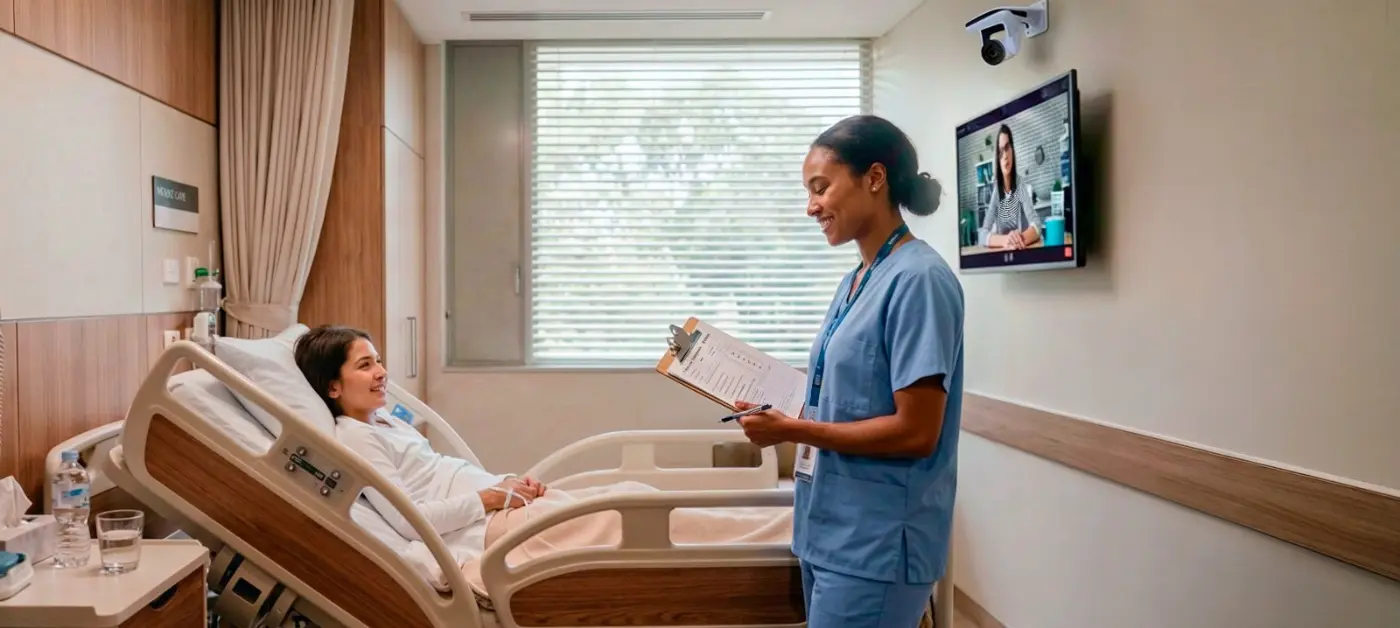
- Virtual nursing and care coordination
- Asynchronous communication such as messaging and check-ins
- Continuous engagement tools that extend beyond appointments
Virtual care is not limited to scheduled visits. It is designed to support ongoing care, improve workflows, and enhance patient safety.
In many cases, virtual care operates in the background, helping clinicians make faster decisions and reducing the burden on frontline staff.
Key differences between telehealth and virtual care
While the two terms are related, their impact on rural healthcare is very different.
1. Scope
Telehealth is encounter-based. Virtual care is continuous and system-wide.
2. Purpose
Telehealth improves access to care. Virtual care improves how care is delivered and managed over time.
3. Workflow integration
Telehealth often sits alongside existing workflows. Virtual care is embedded into daily operations and clinical processes.
4. Staffing impact
Telehealth extends provider reach. Virtual care can reduce workload, support nurses, and improve staffing efficiency.
5. Outcomes
Telehealth addresses immediate needs. Virtual care is designed to influence long-term outcomes, including patient safety, readmissions, and care coordination.
What rural hospitals actually need
Telehealth is an important starting point. It solves access challenges quickly and is often easier to implement. Many rural hospitals have already adopted some form of telehealth, especially since the COVID-19 pandemic.
However, telehealth alone does not address the deeper operational challenges rural hospitals face.
The biggest pressures today include:
- Nursing shortages
- Increased patient acuity
- Limited financial resources
- Regulatory and reporting requirements tied to outcomes
Virtual care is better aligned with these challenges.
By enabling continuous monitoring, centralized support, and smarter workflows, virtual care helps hospitals operate more efficiently without requiring a proportional increase in staff.
For example, virtual nursing models allow experienced nurses to support bedside teams remotely. AI-driven monitoring tools can identify patient risks earlier, helping prevent falls or deterioration. These capabilities directly impact both patient outcomes and staff workload.
Why the distinction matters for investment decisions
Rural hospitals are increasingly accessing funding through programs like the Rural Health Transformation Program. These funds are meant to drive long-term, sustainable change.
Investing only in telehealth can create short-term improvements without fundamentally changing how care is delivered. In contrast, investing in virtual care infrastructure positions hospitals to:
- Scale services without adding headcount
- Improve quality metrics tied to reimbursement
- Standardize care across locations
- Build resilience into operations
This is where integrated solutions become important. Platforms that combine communication, monitoring, and workflow support into a single system reduce complexity and improve adoption.
The role of simplicity in adoption
One of the biggest barriers to digital transformation in rural healthcare is complexity. Many solutions require multiple applications, extensive training, or ongoing IT management.
Successful virtual care models prioritize ease of use. Systems that work on existing infrastructure, require minimal training, and integrate into daily routines are more likely to succeed.
This is especially important in rural environments where IT resources are limited and staff cannot afford additional friction.
A practical path forward
Rural hospitals do not need to choose between telehealth and virtual care. The most effective approach is to view telehealth as one component of a broader virtual care strategy.
A practical roadmap looks like this:
- Maintain or expand telehealth services to support access
- Introduce virtual care tools that address high-impact areas such as patient monitoring or nursing support
- Integrate these tools into existing workflows rather than adding parallel systems
- Focus on measurable outcomes such as reduced falls, improved response times, and better staff utilization
This approach ensures that investments translate into real operational improvements.
Final thoughts
Telehealth opened the door for digital care in rural communities. Virtual care is what allows those communities to build a sustainable future.
For rural hospitals, the question is no longer whether to adopt digital health solutions. The question is how to invest in systems that support both patients and providers over the long term.
Understanding the difference between telehealth and virtual care is the first step toward making that decision with confidence.
Sources
- Centers for Medicare & Medicaid Services
- Health Resources and Services Administration
- American Hospital Association
- National Rural Health Association
- Office for the Advancement of Telehealth
Author

Invest with GHC for a better future.
At GHC, our investment strategy focuses on achieving the full potential of promising assets. We offer robust opportunities for our investors by nurturing businesses to reach their peak performance, emphasizing long-term growth over short-term gains. This approach secures stable growth and strong returns, creating lasting value for our investors and the communities we serve.
