
AI Triage in Healthcare Is Redefining Patient Flow and Clinical Decision-Making


.webp)
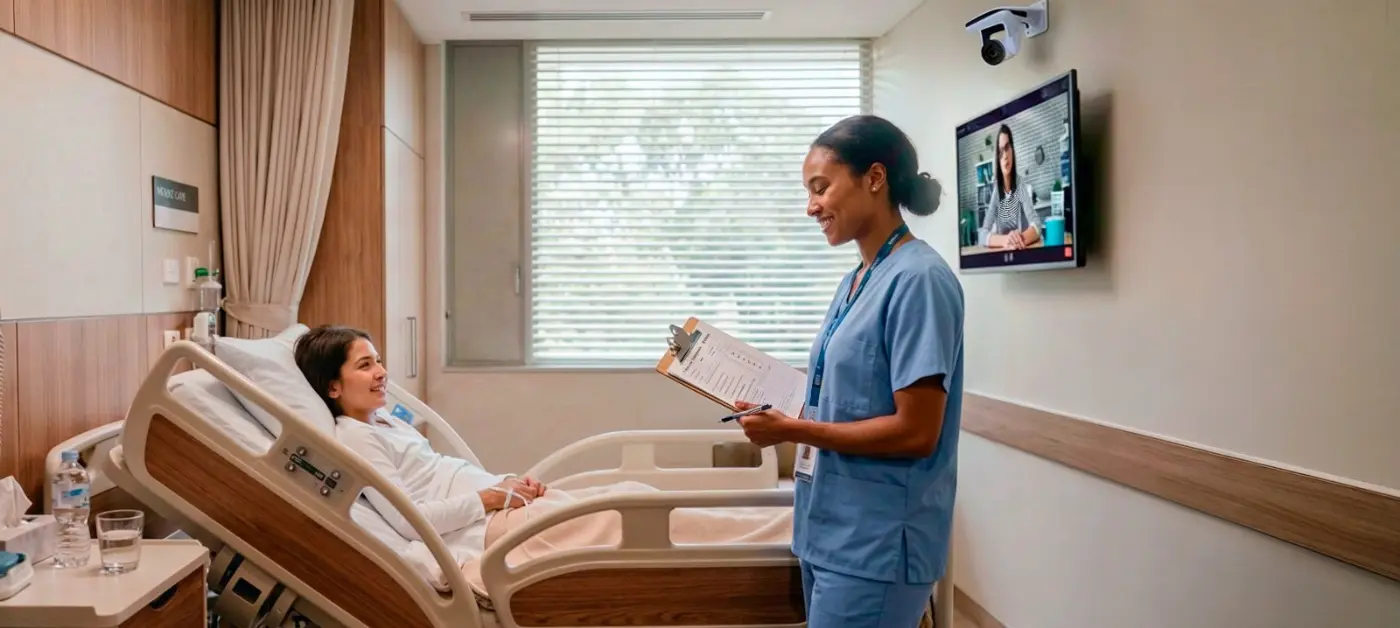
Artificial intelligence is rapidly expanding its footprint in U.S. healthcare systems, but nowhere is its impact more transformative than in clinical triage. For years, virtual nursing programs demonstrated how technology can streamline documentation, improve staffing ratios, and reduce burnout. Now, AI-powered triage is pushing this evolution further, addressing not only bedside support but also the core challenge behind every staffing, throughput, and financial pressure: getting the right patient to the right level of care at the right moment.
AI triage is emerging as one of the most important tools for health systems navigating reimbursement compression, workforce shortages, rising acuity, and new models of care delivery. And unlike legacy automation tools, AI triage layers intelligence across the entire patient journey, from pre-arrival to discharge, creating a continuous, systemwide operating advantage.
Why AI Triage Is the Next Frontier Beyond Virtual Nursing
Virtual nursing solved a crucial gap: the administrative and non-hands-on tasks that pull bedside teams away from direct care. AI triage complements that system by improving clinical prioritization, accelerating decision support, and giving every care team a clearer view of patient risk in real time.
Three forces are accelerating demand:
1. Intensifying Workforce Shortages
The U.S. may face a shortage of up to 450,000 nurses by 2025 and an even larger deficit of primary care physicians by 2030. AI triage acts as a workforce multiplier, automating low-complexity assessments while escalating high-risk cases to clinicians immediately.
2. Reimbursement Pressure and Throughput Bottlenecks
Hospitals lose millions each year due to delays in triage, slow room turnover, and extended length of stay; problems that worsen when manual processes slow down patient flow. AI triage enables faster, more accurate movement through EDs, inpatient units, and ambulatory settings.
3. Increased Patient Acuity and Unpredictable Volumes
AI systems can recognize risk patterns long before symptoms escalate, enabling proactive intervention and reducing avoidable readmissions.
Virtual nursing improves how care is delivered.
AI triage improves where and when care is delivered.
Together, they represent a new operating model that blends workforce efficiency, predictive intelligence, and continuous patient monitoring.
How AI Triage Works Across the Patient Journey
Pre-Arrival: Automated Intake and Risk Scoring
AI captures patient-reported symptoms, history, and biometrics (often through mobile tools, kiosks, or remote monitoring devices) then assigns risk levels before the patient ever reaches triage.
This shortens the first critical minutes of care and prevents misclassification.
Emergency Department: Real-Time Prioritization
AI interprets:
- Vitals and biometric trends
- Natural language descriptions of symptoms
- Prior medical history
- Environmental factors and social determinants
The output is a more precise acuity score that gets the highest-risk patients seen faster.
Inpatient Monitoring: Continuous Triage, Not One-Time Assessment
Unlike traditional triage, which happens once upon arrival, AI triage continues:
- Detecting deterioration
- Tracking early warning signs
- Predicting falls, elopement, or risk behaviors
- Flagging inconsistencies in documentation
This is where AI triage dovetails with virtual nursing: creating a safety net that identifies both clinical and operational risk.
Post-Discharge: Predicting Readmission and Care Needs
AI identifies which patients need follow-ups, home monitoring, telehealth visits, or intervention from care coordinators. This reduces readmissions and supports value-based care contracts.
Strategic Benefits for Health Systems
1. Operational Relief Where It Matters Most
AI triage reduces the administrative burden on clinicians and improves staffing allocation. With real-time awareness of acuity, health systems can adjust staffing, or deploy virtual nursing resources, more efficiently.
2. Stronger Patient Safety and Early Intervention
AI detects subtle changes that a human may miss, especially during understaffed or high-volume shifts. This leads to fewer rapid responses, fewer preventable escalations, and higher patient satisfaction.
3. Reduced Length of Stay and More Efficient Patient Flow
More accurate triage improves downstream operations:
- Faster room assignments
- Better bed utilization
- Fewer boarding delays
- Quicker transitions to step-down or discharge
These improvements directly impact a hospital’s bottom line.
4. Financial Stability in a Tight Margin Environment
With pressures from Medicare reimbursement, payer mix shifts, and uncompensated care, health systems increasingly rely on operational efficiency as a financial lever. AI triage supports this by reducing waste and improving throughput metrics tied to reimbursement.
5. Foundation for Scalable Virtual Care Models
AI triage lays the groundwork for:
- Virtual ICU and virtual observation
- Remote tele-triage hubs
- Hybrid hospital-at-home programs
- Community-based monitoring
As virtual nursing becomes standard, AI triage provides the intelligence layer that elevates these programs from supportive to strategic.
What AI Triage Means for the Future of Healthcare Delivery
AI triage represents a shift from reactive to predictive healthcare. Instead of waiting for symptoms to worsen or workloads to overwhelm staff, health systems gain the ability to intervene earlier and more efficiently.
The long-term implications are significant:
- A more sustainable workforce
- Higher margins for financially strained hospitals
- Faster, safer, more personalized patient care
- Standardized triage practices across diverse settings
- A new operating model built on intelligence rather than manual workflows
AI triage is not replacing clinical judgment, it is expanding its reach.
As virtual nursing continues to reshape bedside care, AI triage will define how the entire system prioritizes, allocates, and delivers it.
AI triage is the next leap forward in healthcare transformation. It strengthens patient safety, accelerates clinical decision-making, and unlocks major operational and financial gains. Health systems that embrace AI triage alongside virtual nursing will be positioned not only to survive workforce and reimbursement pressures, but to build a scalable, resilient care platform for the next decade.
The future of virtual care is not one technology, it’s the ecosystem created when intelligent triage and virtual nursing work together to support clinicians and improve outcomes.
Sources
- American Nurses Association. Nursing Workforce Shortage Projections.
- Association of American Medical Colleges (AAMC). Physician Supply and Demand Report.
- Agency for Healthcare Research and Quality (AHRQ). Emergency Severity Index Triage System.
- Journal of Medical Internet Research (JMIR). AI-Assisted Triage Models and Predictive Performance.
- McKinsey & Company. The Future of Virtual Care.
- Deloitte. 2025 Outlook for Health Systems.
- The Lancet Digital Health. Machine Learning–Driven Early Warning Systems.
Author


Invest with GHC for a better future.
At GHC, our investment strategy focuses on achieving the full potential of promising assets. We offer robust opportunities for our investors by nurturing businesses to reach their peak performance, emphasizing long-term growth over short-term gains. This approach secures stable growth and strong returns, creating lasting value for our investors and the communities we serve.
