
The Fourth Foundation: Why Compute Is the Infrastructure of the Next Economy
Every major leap in the American economy started the same way. Someone built the infrastructure first, and everything else followed.
It is easy to forget this, because we tend to remember the outcomes and not the foundations. We remember the boomtowns, the suburbs, the digital economy. We forget that each of them sat on top of a piece of infrastructure that had to be built before any of it was possible.
We are in the early stages of building the fourth one now. It does not look like the ones before it, and that is exactly why a lot of people do not yet see the path we are heading down.
The Pattern That Keeps Repeating
Start with the railroads.
In the nineteenth century, wherever the rail line went, the economy followed. Towns formed around depots. Goods moved to places they could never reach before. Industry, people, and commerce organized themselves around a new ability to move things across distance. The railroad did not just serve the economy. It decided where the economy would be.
A century later, the pattern repeated with roads. The Federal-Aid Highway Act of 1956 authorized the largest public works project in American history to that point, tens of thousands of miles of interstate highway built over the following years. The effect was profound. Freight costs fell. A genuinely national market formed, because companies could now supply far larger areas at far lower cost. An entirely new form of American life, the suburb, came into existence because people could finally live at a distance from where they worked and still get there. The word suburb as we use it today is a product of that infrastructure.
Then came the internet.
In the 1990s, the economy digitized. For the first time, you did not have to be physically next to someone, or run a physical wire to them, to do business. Communication and commerce lifted onto a digital layer that reached anywhere. It changed which companies won, where value concentrated, and what kinds of work were even possible. Like the railroad and the highway before it, it was infrastructure first, and transformation second.
Three waves. Three foundations. Each one invisible in hindsight, because we only remember what got built on top of it.
The fourth foundation is compute.
What Compute Actually Is
This is where much of the public conversation has been breaking down.
Many people have been encountering this topic through a single, loaded phrase: data centers. The reaction in a lot of communities has been some version of no. No data centers. While the concerns are real and worth taking seriously, framing is missing the central point.
A data center is not the point. Compute is the point.
Compute is the capacity to process information at enormous scale. It is the engine underneath artificial intelligence, advanced logistics, modern research, and the automation that is coming to manufacturing. Think of data centers the way you would think of railroads and highways: not as the destination, but as the base that everything else runs on. They are the digital roads of this era, and like the physical roads before them, they determine what becomes possible nearby.
Here is the part that matters for anyone who cares about where jobs and industry go next.
Without the compute, the factory of the future cannot run.
Why This Is a Manufacturing Story
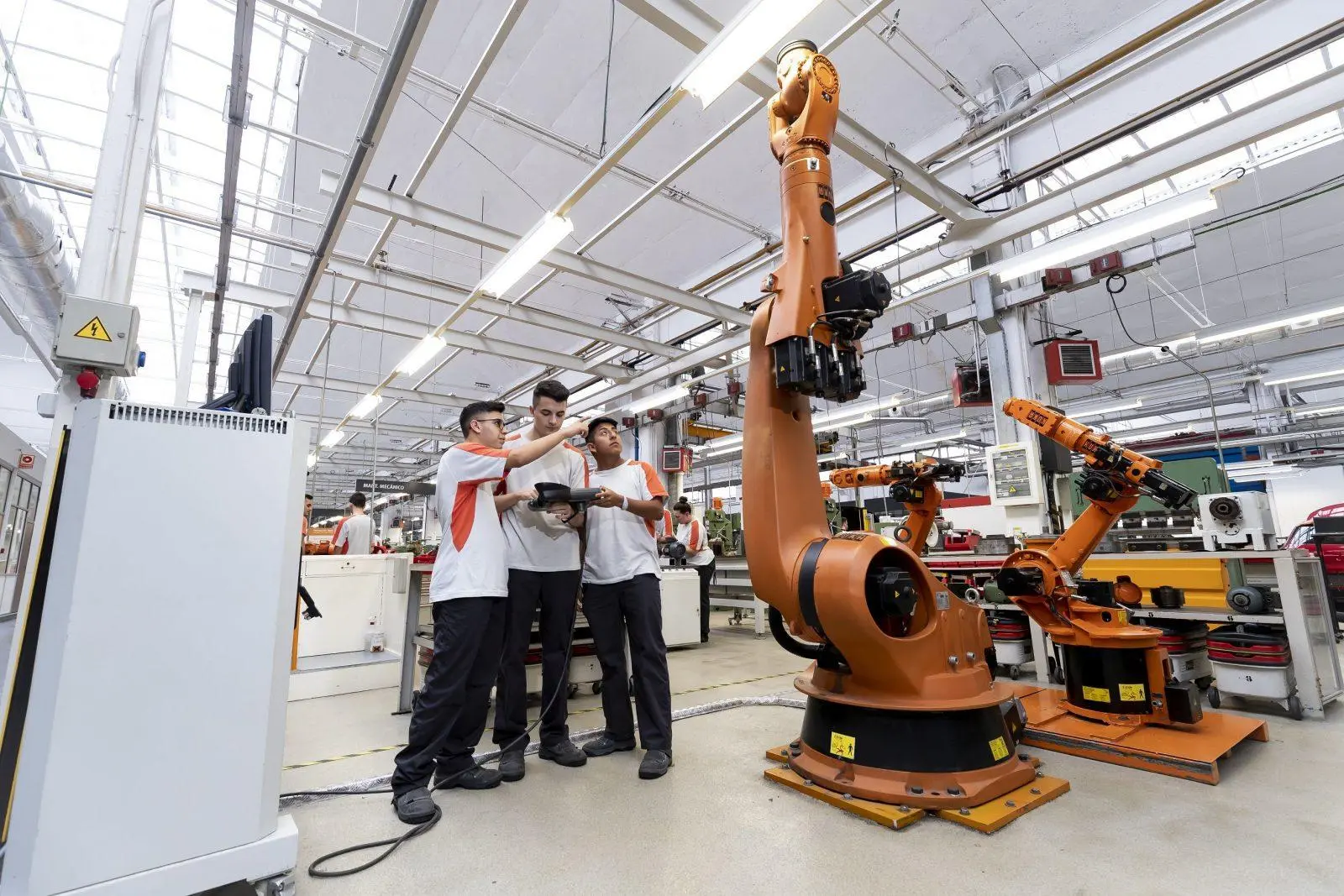
The next era of manufacturing, often called Industry 4.0, is not the manufacturing most people picture. It is not five thousand people walking into a plant with a lunch pail. It is a smaller number of highly skilled people running highly automated, highly precise operations that produce far more than a traditional plant ever could.
That model only works where the compute lives. The intelligence that runs advanced manufacturing, the systems that design, optimize, and control it, depends on processing power being physically and economically available nearby. Put the compute in place, and the factory becomes viable. Leave it out, and it does not.
This is why the fight over data centers is really a fight over the industrial future, even if it is not framed that way yet. A region that builds compute capacity is not just hosting servers. It is laying the groundwork to bring production back, to make complex, high-value goods close to home instead of importing them across oceans from low-cost labor markets on the other side of the world.
Consider what that actually changes. Today, an enormous share of the everyday goods we use, from the mats in your car to the containers in your kitchen, is made in Southeast Asia, loaded into shipping containers, and moved across the world to reach us. We treat that as efficient because it is all we have known. An economy with compute and advanced manufacturing at home can make many of those things here, put them on rail and road that already exist, and take them to market without any of the ocean in between.
Where the Map Favors the Midwest
This is the part of the story that gets overlooked, and it is the part that should matter most to people in Ohio and across the industrial Midwest.
The regions best positioned for this next wave are the ones that already have the physical infrastructure the last three waves left behind. Rail. Highways. Waterways. The bones of an industrial economy that were built out over a century and never went away.
Layer compute on top of that existing foundation, and the equation changes. You do not need to build a region from nothing. You need to add the missing layer to a region that already has everything else. That is a very different and far more achievable proposition, and it is why serious semiconductor and advanced manufacturing investment has been moving toward places that were written off a generation ago.
The United States has committed enormously to this. More than six hundred billion dollars in semiconductor supply chain investment has been announced across the country in recent years, and Ohio sits inside that map, not outside it. Intel's semiconductor campus in Licking County, near Columbus, represents the single largest private-sector investment in the state's history. The timelines are long and the execution is hard, as any honest account will tell you. The direction, though, is unmistakable. The foundation of the next economy is being poured, and some of it is being poured here.
The Signal Inside the Signal
Which brings us to a piece of news that most people underrated when it landed.
Apple and Intel reached a preliminary agreement for Intel to manufacture some of Apple's chips in the United States. On the surface, it reads as a narrow deal. Entry-level processors, a multi-year timeline, plenty of execution risk still ahead. TSMC, the Taiwanese company that produces the overwhelming majority of the world's most advanced chips, remains Apple's core supplier.
Read it against everything above, though, and it is bigger than it looks.
For years there was functionally one place on earth that could make leading-edge silicon at the standard the most demanding companies require. That concentration was a single point of dependency underneath nearly every important technology product on the planet. Apple is the pickiest customer in that entire market. It thinks in ten-year terms, and it is willing to build a second source at home.
The chips are not the story. The signal is. When the most exacting customer in technology validates a domestic foundry, it tells every other company in the world that another path has become viable. If it is good enough for the company that trusts almost no one, it is good enough to build around. That is how ecosystems begin, with one anchor decision that makes the next hundred easier.
Why It Is Worth Getting Right
None of this happens quickly. Infrastructure never has. The railroads took decades. The interstate system took a generation. The internet felt sudden only because we forgot the years of unglamorous buildout underneath it.
Compute will be the same. It will be built slowly, through investment that looks incremental right up until the moment it does not, and then a decade from now people will treat the transformation as if it were obvious all along.
It is not obvious now. That is the opportunity. The regions and the people who understand what is being built, and why compute is the foundation and not the nuisance, are the ones who will be positioned when the rest of the economy organizes itself around it, the same way it organized around the rail line, the highway, and the network before.
The foundation is being laid. The question worth asking is not whether it will reshape the economy. It is where.
Sources
- The Wall Street Journal, "Apple, Intel Have Reached Preliminary Chip-Making Agreement," May 2026
- Federal-Aid Highway Act of 1956, U.S. National Archives; Federal Highway Administration historical record
- Center for the Study of Federalism, on the economic effects of the Interstate Highway System
- Semiconductor Industry Association, U.S. semiconductor supply chain investment tracker, 2026
- Intel Corporation, "U.S. Semiconductor Manufacturing" (Ohio / Silicon Heartland investment figures)
- Center for Strategic and International Studies, "Too Good to Lose: America's Stake in Intel," 2026
- Bloomberg and Canalys data on Apple's India production shift, as reported 2025–2026
Author

Bhavin Patel has over fifteen years of comprehensive business management experience and an exceptional record of accomplishments in operations, with expertise in real estate M&A. He has a proven ability to implement corporate goals and business objectives.


Invest with GHC for a better future.
At GHC, our investment strategy focuses on achieving the full potential of promising assets. We offer robust opportunities for our investors by nurturing businesses to reach their peak performance, emphasizing long-term growth over short-term gains. This approach secures stable growth and strong returns, creating lasting value for our investors and the communities we serve.
